Can you turn your crafting hobby into a business?
You can turn your crafting hobby into a business, but it won’t necessarily be as simple as listing your creations for sale.
Crafting can remain enjoyable, but it may turn from a relaxing pastime to a structured process. Success will require planning, market research and proper pricing models.
Get Covered When Starting Your Craft Business
What changes when you go from a hobby crafter to a business?
Transitioning from a hobby crafter to a business will add a whole host of responsibilities to your trade. Your focus will shift from solely crafting to legal rules, taxes, profits and more:
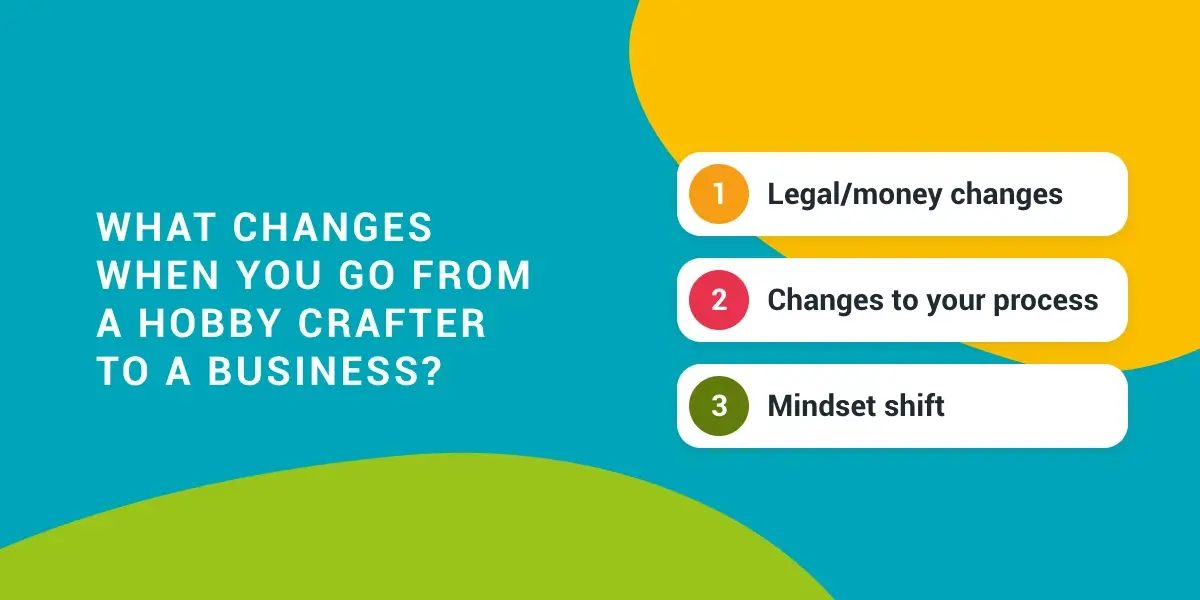
- Legal/money changes – You’ll need to register as a sole trader or limited company, and begin to file tax returns and keep records of sales, profits and income. You’ll also need a comprehensive craft insurance policy to protect your business.
- Changes to your process – Instead of crafting casually, you should start to calculate the cost of materials and labour. It will become increasingly important to optimise crafting operations and work out where to sell your crafts.
- Mindset shift – It’s important to continue to enjoy crafting as a passion, but you may be required to transition from casual crafting to treating it as a job with set hours. Dedicate time to the less crafty parts, such as packing orders and marketing.
The starting point of turning your craft hobby into a business
To get started, you need to decide what type of craft business you’re going to set up. There are a range of craft business types, including:
1. Cake making
2. Candle making –
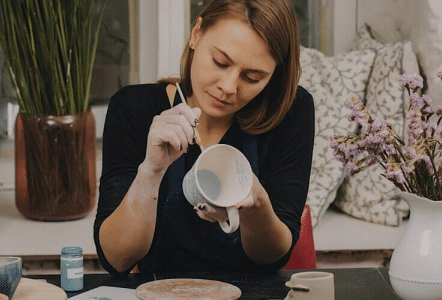
3.Ceramic and pottery
4. Cosmetics
5. Fashion accessories
6. Jewellery making
5. Resin art
Once you’ve decided on your craft, it’s time to research your target audience. It’s usually beneficial to test your products on online marketplaces such as Etsy or Amazon Handmade, so you can see how fast they’ll sell, and at what price.
The final start-up steps are to register as a sole trader or as a registered business. We’d recommend checking your local rules to see what type of license or tax registration you need. You should also research why you need insurance as a crafter.
Preparing for the costs of starting a craft business
Starting your new craft business may accrue more costs than you expect upfront. For a smaller business, you may need an initial investment of roughly £200 to £500, provided you already own the basic equipment for your craft.
This will cover materials and tools, packaging, platform fees, marketing expenses, public liability insurance, product liability insurance and necessary legal fees.
Equipment you might need to start selling your crafts
Primarily, you will need the main tools, materials and equipment unique to your craft. If you’re already a crafter, it’s likely that you already have most of these, but it’s important to upgrade any defective equipment, and consider consistent supply for materials.
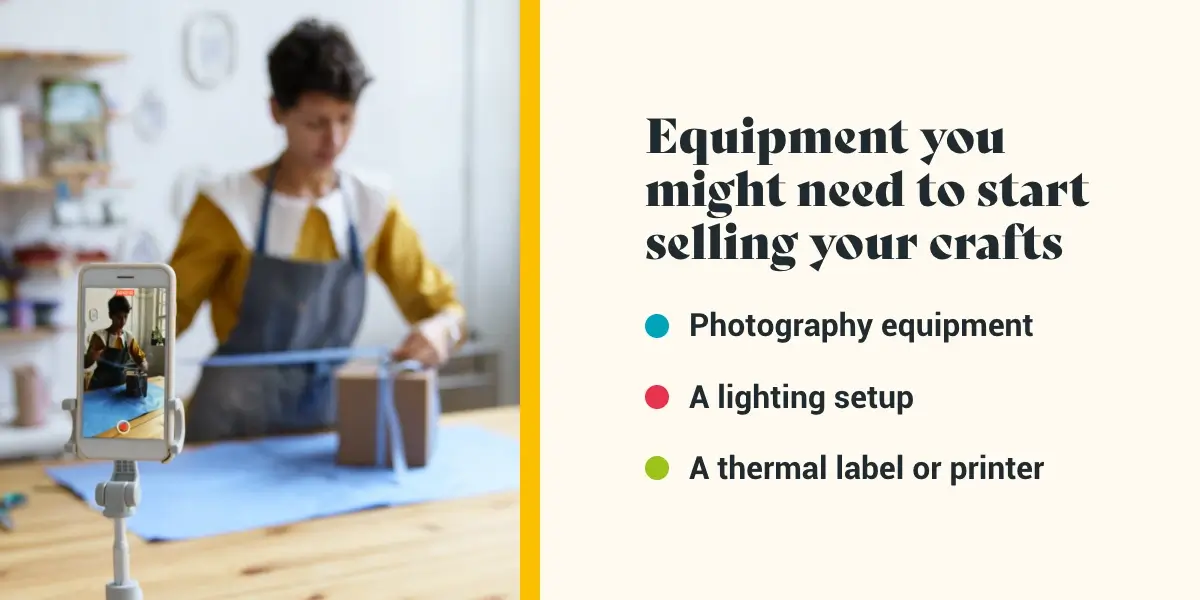
On top of this, you are likely to need photography equipment (a good quality phone camera should be sufficient) for marketing purposes, a lighting setup to showcase your products, and a thermal label or printer in order to ship items.
The logistics of turning a craft hobby into a business
There are a few final pieces to sort before you launch. Once you have insurance sorted, it’s worth knowing how making a claim works before you need to.
On tax, registering and legalities, you’ll need to decide between sole trader and limited company status, keep proper records for HMRC and follow consumer and product safety rules. Our guide on how to sell crafts legally covers it all.
Beyond the marketplaces already covered, if you go via eBay it’s worth checking the platform’s specific rules, and don’t overlook social commerce as another route to customers.
Finally, get your branding, name, logo and photography right early on: our ultimate guide to starting a craft business has tips, plus advice on pricing and marketing to help you build an audience from day one.
For a quick and free craft insurance quote to protect your new business, click the link below.
Free Craft Insurance Quote