Does GDPR apply to small and micro businesses?
GDPR applies to all businesses, including small and micro businesses. Any organisation which processes personal data such as customer names, email addresses, or employee details, must comply with the rules.
However, the size of your business does have an impact on the extent to which you need to follow rules. For example, any business with below 250 employees does not need to maintain a complex record of processing activities, and you won’t need a dedicated data protection officer.
Craft Insurance can Protect Against Data Breaches
Why GDPR compliance is important for small craft businesses
Failing to adhere to GDPR compliance can result in serious legal and financial penalties, as well as potential cyber breaches. This could lead to devastation for your business. Total compliance is the only way to guarantee avoiding hefty fines and legal battles.
On top of this, showcasing your dedication to handling customer data seriously builds vital customer trust in an era with customers becoming more and more hesitant to hand over details to unverified sellers.
General good practice regarding data protection also benefits your business in an operational sense too. Security measures such as strong passwords, encryption and limited data access will transfer to your own inventory files, client lists and confidential information.
Finally, GDPR compliance allows you to streamline marketing campaigns. You’ll have decluttered mailing lists and a clear understanding of which customers have consented to marketing.
Common GDPR issues in craft businesses

Regular GDPR issues in craft businesses tend to stem from managing data without proper systems in place:
- Unsolicited email marketing – Scraping customer emails from social media or automatically adding them to a newsletter after they make a purchase is not allowed. Instead, obtain opt-in consent before using emails for marketing.
- Missing privacy policies – Selling through a website, social media, or even in person requires a clear policy explaining how customer data is handled, collected, stored and used.
- Mishandling data from third party platforms – It may be tempting to export data from platforms such as Etsy, Amazon Handmade, and more. However, data must only be processed for the exact purpose it was provided, unless there is express permission.
- Website cookies – Visitors to your website must be allowed to accept or reject non-essential cookies before data is collected.
How to comply with UK GDPR as a small craft business
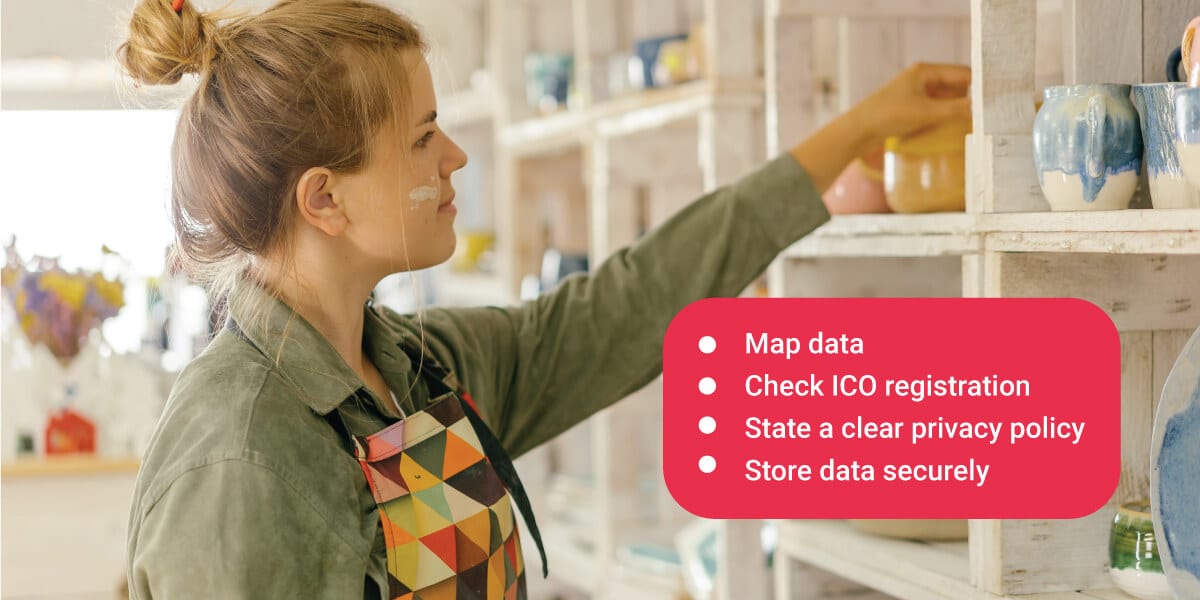
Complying with UK GDPR as a small craft business involves following multiple steps to map the data you collect and maintaining simple policies to process it:
1. Map data – Document customer data, where you store it, and where it’s from. This is usually order details such as names, addresses, email addresses, and phone numbers.
2. Check ICO registration – Even smaller businesses usually need to pay a data protection fee to the Information Commissioners Office (ICO). Learn more with the ICO self assessment tool.
3.State a clear privacy policy – On your website, you need a clear privacy policy which states who you are, the data you collect, why it’s needed, who it’s shared with, and how long it’s kept for.
4. Store data securely – Whether orders are stored on physical paper or digitally, it must be safely and responsibly stored. This includes maintaining strong passwords, two-factor authentication, and storing physical documents in locked filing cabinets.
On top of these steps, you need to make sure to obtain optional marketing consent by allowing users to opt-in to be on mailing lists. You should also familiarise yourself with how to deal with data requests, and understand how craft insurance can protect your business against potential financial fallout.
Learn More About Craft Insurance and GDPR Breaches